IKEA PAX Master Closet: How We Made It Look Custom + Every Dollar Spent
What started as a straightforward IKEA PAX installation turned into a full structural renovation when we discovered hidden space behind the wall. We tore it down, redesigned the entire layout, and built something that no longer looks like IKEA. This post walks you through all 10 phases of the build, the honest cost breakdown, how to paint IKEA furniture correctly, and every product that earned a place in this closet.


If you haven’t watched the design planning video yet, I’d start there — it covers how I measured the space, tested five different layout options in the IKEA PAX planner, and landed on the original plan before everything changed.
Check out the full YouTube video here ↓ ↓
shop the closet

This post contains affiliate links, which means I may earn a small commission if you purchase through these links at no additional cost to you. Thank you for your support!
The Before: What We Were Working With
The original closet had basic shelving that wasn’t being used efficiently, and — as we’d soon find out — a wall hiding a significant amount of dead space.

Phase 1: Original Assessment & IKEA PAX Design Plan
Every project I do starts the same way: measuring, planning, and testing the layout before a single thing gets purchased. For this closet, I spent time in the IKEA PAX Planner testing different configurations until we landed on a solid design: (4) 39″ PAX units as the foundation, plus a custom shoe cabinet and a small corner unit.


It was a good plan. And then demo day happened.
Phase 2: Clean Out & Demo
Before building anything, we needed a blank slate. Everything came out of the closet — clothes, shelving, hardware, all of it. We repurposed a few shelves and rods, but everything else went.
Setting up a temporary closet in another room before starting a project like this is the best way to stay sane. You’ll be without your closet for a while, and having a functioning system somewhere else keeps daily life manageable.
Phase 3: The Discovery
My husband was handling the demo when he accidentally punched a couple of holes in the drywall. Standard stuff — I was ready to patch them and move on.
Then I noticed how hollow they sounded.
I reached back into one of the holes. No insulation. No drywall on the other side. I decided to investigate further, and what we found behind that wall was brick and a significant amount of completely unused dead space.


That moment changed the entire project.
Phase 4: Decision & New Design Plan
Once I knew what was back there, I had to make a decision: patch the holes and stick with the original plan, or tear down the wall and use the space properly.
I asked you guys for ideas — a hidden safe, a makeup vanity, a laundry chute, extra shoe storage — and you delivered. But before getting too excited, we had to confirm three things:

- Was the wall load-bearing? No.
- Were there gas or water utilities in it? No.
- Could we safely expand? Yes.
So we tore it down. And the scope of the project changed completely.
By removing the wall and relocating the closet entry, we gained direct access from the master bedroom instead of routing through the bathroom. Closing off the bathroom doorway also opened up usable space on the bathroom side for a future linen closet — a bonus we hadn’t planned for.


The original four-unit plan became a six-unit design, and we were back to the IKEA PAX planner to redesign from scratch.
Phase 5: Structural Work (Framing, Drywall, Electrical & Flooring)
Wall removal, framing the new opening, drywall, electrical updates, and floor patching — this is what it actually takes to expand a closet. We handled the framing and drywall ourselves. We did some of the electrical work and hired out the rest. My honest advice: if you’re not confident in structural work or electrical, bring in a professional for that portion. It’s one of those areas where cutting corners costs you more in the long run.


I didn’t include these structural costs in the main cost breakdown below because they were entirely specific to our situation — removing a wall and relocating an entry is not standard to a PAX install. If your closet doesn’t involve structural changes, your project cost will look very different.
Phase 6: IKEA PAX Installation
With the space prepped, we installed six IKEA PAX units instead of the original four.
The frames we used: 39 3/8″ wide x 22 7/8″ deep x 92 7/8″ tall — a good fit for standard 96″ ceilings.
One decision I’m glad we made: instead of using IKEA’s corner units, we pushed the regular units all the way to the corner. There’s some blind storage back there now, but that’s where we keep seasonal items we don’t need daily access to — it works perfectly and maximizes usable space in a way the corner units don’t.


Assembly is straightforward if you follow the instructions step by step. The interior components — shelves, drawers, rods — all install after the frames are secured to the wall.
Interior components used:
- KOMPLEMENT Drawers — 8 full drawers for folded clothing and everyday essentials
- Basic Shelves
- Glass Shelves — keeps the closet feeling open and light
- Pull Out Tray with Accessory Inserts — 2 sliding trays for smaller accessories
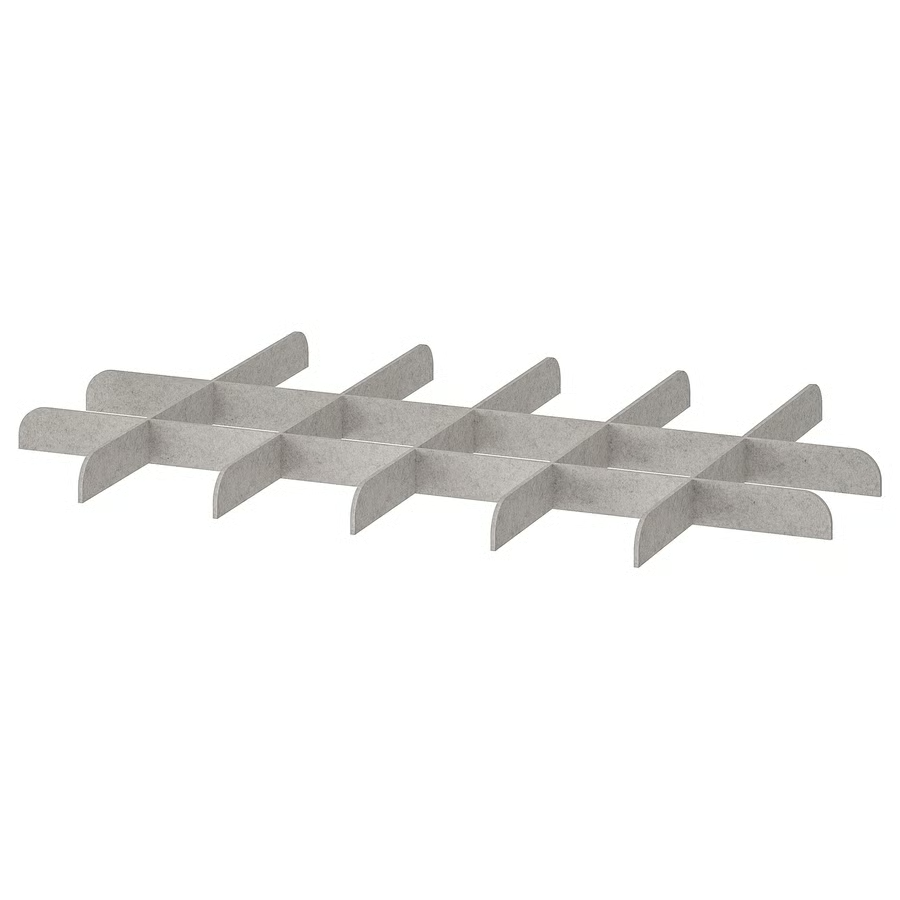
- Tray Dividers — perfect for jewelry, belts, sunglasses
- 9 white hanging rods
The PAX system out of the box looks like IKEA. But the trim work, paint, and finishing details in the phases below are what transform it into something that looks genuinely custom.
Phase 7: Custom Shoe Cabinet Build
I wanted dedicated shoe storage that matched the scale and aesthetic of the PAX units — so I built a custom cabinet from scratch at the same height as the frames.


The shelves are slightly angled for better display, and I used Rockler Shoe Fences (Matte Nickel) to keep shoes secure and evenly spaced. That detail alone elevates the whole section from “shelf with shoes on it” to something that looks intentional.
Cost: under $200 — 3/4″ plywood for the frame, 3/4″ 1×12″ for the shelves, and edge banding.
If you’d rather not build from scratch, IKEA does have a closet-friendly option: use the narrower 13 3/4″ deep PAX units paired with KOMPLEMENT shoe shelves — angled, adjustable, and approximately $345.

Phase 8: Trim Work (Base, Crown & Vertical)
This is the phase that makes the biggest visual difference. Trim is what makes IKEA look built-in.


Put simply: when you install multiple PAX units side by side, you have visible seams where the frames meet. A 1.5″ face trim piece covers those seams cleanly. Base trim fills the gap between the units and the floor, creating a continuous line that matches the rest of the room. Crown molding closes the gap at the top of the units and the ceiling. Done well, it looks like one cohesive built-in system.

I was planning to use standard crown molding and then upgraded to dentil crown molding to fit the character of our historic colonial home. It’s a more expensive choice — but it’s a jaw-dropping detail in a space that needed that level of finish.

Trim materials and costs:
- 1-1/2″ x 8′ PVC Lattice Moulding (5 pieces) — $42
- Dentil Crown Moulding (3 pieces) — $120
- Colonial Baseboard Moulding (3 pieces) — $36
- Trim total: ~$200
Rockler tools that made trim installation manageable:
- Crown Molding Support — holds the molding at the correct angle so you can focus on fastening instead of fighting gravity. Essential for solo install.
- Bandy Clamps — for aligning the face trim to the IKEA units while securing with brad nails
- Spring-Loaded One-Handed Bar Clamp — keeps units tight and aligned while screwing them together
Phase 9: Prime & Paint (How to Paint IKEA PAX Correctly)
Here’s where I have to be honest with you, because I’ve painted IKEA before and gotten it wrong.
Every time I’d painted IKEA furniture in the past, I ended up with surfaces that were sensitive and prone to chipping. It was frustrating enough that I almost didn’t paint this closet at all. My original plan was white — but the white IKEA units I wanted wasn’t in stock. So I ordered a gray-beige as a substitute, thinking I could work with it.
When it arrived, I didn’t love it. Too gray. Too flat.
So I switched to the bold color I’d actually wanted from the beginning: Carriage Red by Benjamin Moore, from their Historic Williamsburg collection — the same color as our front door, and exactly right for this colonial home.
That decision cost extra time and a little more money. It was absolutely the right call. This is the first room we walk into every morning. I wanted to love it.
And this time, I finally figured out how to paint IKEA properly. Here’s the process that worked:
How to Successfully Paint IKEA Furniture
Step 1: Surface Prep
Lightly sand every surface with 180-grit sandpaper by hand — you’re just roughing up the laminate so primer and paint have something to grip. Wipe off all dust thoroughly. Dust is the number one enemy of paint adhesion on laminate surfaces.

Step 2: Prime with the Right Primer
This is non-negotiable: use a bonding primer designed specifically for laminate or slick surfaces. I used Zinsser BIN Primer — don’t cheap out on this step. The primer is what makes or breaks an IKEA paint job.
Apply two thin coats, sanding lightly with 220-grit sandpaper between coats. Thin coats adhere better and look more professional than one thick coat. Follow the dry times on the can exactly.
I used a paint sprayer for the primer coats. It got the job done significantly faster than hand priming and produced a more even finish.


Step 3: Choose High-Quality Paint
I used Benjamin Moore Aura in a semi-gloss finish. Semi-gloss adds a rich, elevated look and holds up better in a high-traffic space than matte or eggshell. Read the label on whatever paint you choose — make sure it’s appropriate for the surface you’re painting.
I applied two coats by hand brush. I painted the shelves and drawers in the garage, and painted everything in the closet — the PAX units, walls, and all trim — in place. This is called color drenching, and it’s what gives the space that rich, immersive, designer feel.
Step 4: Ventilation Is Not Optional
Painting in a small closet means concentrated fumes. Cover up fully, wear a heavy-duty respirator and eye protection, and invest in a ventilation fan that you can vent out a window. Consistent airflow also helps with drying time.

Why I didn’t paint everything outside or in the garage first:
People always ask this. It’s not the right move for a project this size, and here’s why:
- We didn’t have the space to paint and store that many pieces while they cured, protected from the weather.
- Temperature and humidity affect how paint behaves, and you lose control of those variables outside.
- Every time you move a painted piece, you risk scratching it.
- You’ll need to touch up paint in the closet after installation anyway — so you’re painting twice.
We painted the shelves and drawers in the garage because they were manageable. The furniture frames were painted in place after installation. For a color-drenched build like this, that was the right call.
The result: After daily use, no chipping. The paint has held up completely. Taking your time with prep and primer is the difference.
Phase 10: Final Touches & Organization
This is where everything came together. The details that make a closet feel finished rather than functional:
Light fixture: 🔗 Lee Brass 16″ Ruched Printed Semi-Flush Mount from Anthropologie — $229 (on sale from $328). Good lighting in a closet is not an afterthought. We consolidated from two poorly positioned fixtures to one centered light and added a recessed light in the new walkway entry. The difference in visibility is significant.


Rug: 🔗 Ruggable Olivia Cream Rug from Anthropologie — $200. Washable, practical for a high-traffic space, adds warmth, and ties into the color of the light fixture beautifully.
Wallpaper: Courtesy of a collaboration with WallPops — carried over from our master bedroom project onto the closet ceiling and entryway. If we hadn’t done wallpaper, the ceiling would have been painted red, too, and honestly, that would have looked great as well.


Drawer hardware: 🔗 Amazon drawer pulls — $60 for a pack of 8. Long, elegant, and innexpensive. Hardware that looks like it cost a lot more than it did.


Valet rod: 🔗 12-Inch Long Expendable and Reversible Pullout Closet Wardrobe Valet Rod. A small detail that gets used constantly — perfect for laying out clothes for trips or hanging items to steam.
Organization system — The Neat Method:
I was gifted these products, and they’ve genuinely earned their place in the closet:
- 🔗 Everyday Hangers (Matte White & Black) — slim, grippy, uniform. The hanger situation in a closet matters more than people realize.
- 🔗 Oxford Bins (Medium, Stone) — structured, beautiful, perfect for seasonal hats, gloves, and accessories
- 🔗 Bin Labels (Bone) and 🔗 Blank Label Set — magnetic, easy to swap as systems evolve


IKEA drawer organizers:
- 🔗 Pull Out Tray Inserts
- 🔗 Tray Dividers
- 🔗 Felt Cubes with Compartments
- 🔗 Felt Cubes without Compartments



Complete Cost Breakdown: $3,500 Total
Here’s every dollar, broken down by phase:
| Item | Cost |
|---|---|
| IKEA PAX system (6 frames + interior components) | $2,305 |
| Custom shoe cabinet (plywood + edge banding + shoe fences) | $180 |
| Trim work (base, crown, vertical face trim) | $200 |
| Primer (Zinsser BIN, 2 cans) | $60 |
| Paint (Benjamin Moore Aura, Carriage Red) | $108 |
| Drawer pulls | $60 |
| Light fixture | $229 |
| Rug | $200 |
| Miscellaneous (screws, nails, caulking, etc.) | ~$158 |
| Total | ~$3,500 |
What’s not included: The structural work — wall removal, framing, drywall, electrical, and floor patching — because those costs were completely specific to our situation.
To put this in perspective: A custom closet company would charge $8,000–$12,000+ for a comparable footprint at this level of finish. We did most of this ourselves because we have the skills, the tools, and a clear picture of what we wanted.
Was the $3,500 worth it? Without question!
How to Make IKEA Look Custom: The Five Details That Matter
If you take nothing else from this post, take this. The PAX system is your foundation — it’s reliable, flexible, and well-priced. What makes it look custom is the finish work layered on top.
1. Trim. Base trim, crown moulding, and vertical face trim that covers the seams between units. This is the single biggest visual upgrade you can make.
2. Paint. Not a basic neutral — a deliberate color decision. Semi-gloss finish. Color drenching the entire space, walls included, is what makes it feel designed rather than assembled.
3. Hardware. Good drawer pulls that feel substantial. It doesn’t have to be expensive to look expensive.
4. Lighting. Centered, intentional, and bright enough to actually see your clothes. Not an afterthought.
5. Finishing details. The mirror that bounces light. The rug that adds warmth. The organization system that actually matches. These are what make you want to use the space every day.
Why IKEA vs. Full Custom?
I’ve built a fully custom closet from scratch before, and it turned out beautifully. So why did I go with IKEA this time?
Time. That’s the honest answer.
Building every shelf, every drawer, sourcing all the hardware, the precision required — it’s a much longer timeline. With a toddler and a one-person content operation, I’m working smarter about where I spend that time. IKEA gives me a pre-manufactured, flexible, reliable foundation I can customize on top of. The result is 90% of the custom closet with 50% of the build time.
Is IKEA always the right choice? No. It depends on your space, your budget, your skills, and your timeline. But for this project, right now — it was exactly right.
Living with the Finished Closet
This closet is not a showroom. We use it every single day.
The Neat Method bins are labeled and accessible. The hanging sections have room to breathe. Seasonal items live in the blind corner storage out of the daily way. Every morning I walk in here, and it’s calm, which sounds small until you’ve spent years walking into a closet that isn’t working.
That’s what Making Home Simple actually means — not aesthetics for aesthetics’ sake, but building spaces that make your daily life easier and more enjoyable to live in.
All Products & Links
IKEA PAX System
- PAX Wardrobe (39 3/8″ x 22 7/8″ x 92 7/8″)
- KOMPLEMENT Drawers
- Basic Shelves
- Glass Shelves
- Pull Out Tray Inserts
- Tray Dividers
Organization
- Oxford Bins (Medium, Stone) — The Neat Method
- Bin Labels (Bone) — The Neat Method
- Blank Label Set (Bone) — The Neat Method
- Everyday Hangers — The Neat Method
- Felt Drawer Cubes with Compartments
- Felt Drawer Cubes without Compartments
Custom Shoe Cabinet
Trim Materials
Paint & Primer
- Zinsser BIN Bonding Primer
- Benjamin Moore Aura, Semi-Gloss — color: Carriage Red (Historic Williamsburg Collection)
Hardware & Finishes
- Drawer Pulls
- Light Fixture — Lee Brass Semi-Flush Mount, Anthropologie
- Ruggable Olivia Cream Rug — Anthropologie
Rockler Tools Used
- Crown Molding Support
- Bandy Clamps
- Spring-Loaded One-Handed Bar Clamp
- Clamp-It Corner Clamp Jig
- Handy Bench
- Bench Cookies
- 2-in-1 Edge Banding Trimmer
Ventilation
Have a Closet Project in Your Future
Start with the design planning video — it walks through how to measure your space, use the IKEA PAX planner, and think through your layout before you buy anything.
And if you’re tackling your own closet project, I want to see it!
![Office Makeover [Built-In Reveal]](https://i0.wp.com/homewithstefani.com/wp-content/uploads/2020/03/Built-In-Reveal-2.jpg?fit=400%2C400&ssl=1)


